The programme is built around a series of scientific and technical projects that bring together the expertise of researchers, engineers and socio-economic stakeholders. Together, they contribute to generating new knowledge, developing simulation tools and designing innovative services for the sustainable management of natural resources.
This approach is based on a collaborative methodology that combines user needs, environmental observation data and advanced digital technologies. Use cases identified in collaboration with regional stakeholders help guide the development of digital twins towards practical and useful applications.
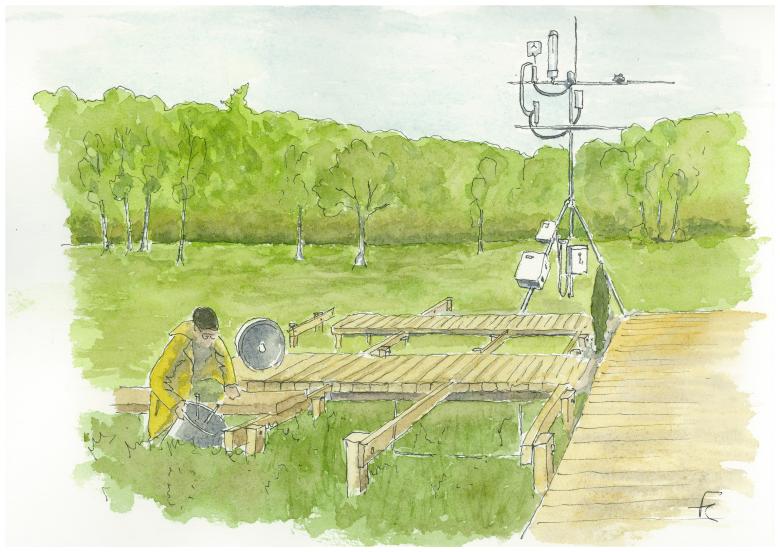
PESAt est une plateforme sur les échanges sol-atmosphère dans les tourbières, développée par le CNRS, l'université d’Orléans et l'ISTO dans le cadre du programme PIVOTS (Orléans, janvier 2018).
© BRGM - François Caplan
JUNON also builds on the legacy of the PIVOTS programme, a unique network of experimental platforms dedicated to environmental metrology. These facilities provide reference data on soils, the subsurface, water and air, forming an essential foundation for understanding natural environments and feeding the digital models developed within the programme.
Firmly rooted in the Centre-Val de Loire region, JUNON transforms the area into a large-scale observatory of lowland environments, making it possible to study interactions between agricultural, forest, river and urban ecosystems and anticipate how they may evolve in response to environmental change.