

Through educational workshops, collaborative projects and outreach events, JUNON encourages people of all backgrounds to explore environmental challenges and discover how data and digital models can help us better understand and protect our environment.
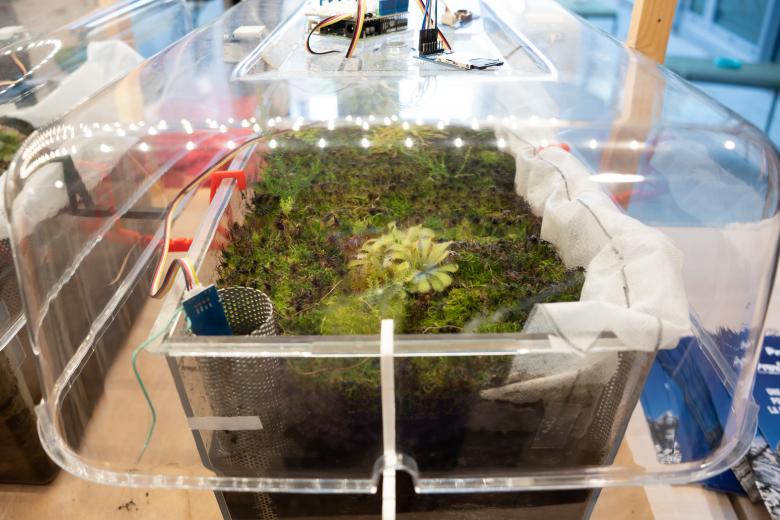
L'une des tourbières expérimentales des lycéens
© BRGM (Monica Molina)
A science workshop for secondary school students
During the 2025–2026 academic year, JUNON supported a science workshop involving a group of secondary school students. Focusing on peatlands, an environmental topic closely linked to soil and atmospheric processes (JANUSS project), the students explored the different stages of scientific research:
- Building peatland models in the classroom;
- Equipping their models with sensors and Arduino microcontrollers;
- Collecting and analysing environmental data;
- Interpreting their findings.
To help design their experiments, the students visited the La Guette peatland in Sologne, as well as research facilities at the Observatoire des Sciences de l'Univers en région Centre (OSUC). They were accompanied by researchers, including Jean-Sébastien Moquet, scientific lead of the JANUSS project. These visits introduced them to the methods and instruments scientists use to study wetland environments.
The project also led to the development of a science education video game. Working alongside industry professionals, the students helped create Tourbanisation, a game in which players develop a region while protecting its peatlands. This gave the students an opportunity to apply what they had learned during the workshop and turn their scientific knowledge into an engaging educational experience for others.
Beyond their experiments, the students also had the opportunity to share their discoveries and communicate their findings to different audiences.
Young Researchers' Meeting
On 21 May 2026, the students took part in the Rencontres Jeunes Chercheuses et Chercheurs (Young Researchers' Meeting), an event bringing together young researchers and students. They presented their project and discussed their work with visitors, including younger school pupils.
The event gave them a chance to become science communicators themselves, adapting their explanations to different audiences and sharing the knowledge they had gained throughout the year.
French Science Festival 2026
On 10 and 11 October 2026, JUNON took part in the Fête de la science (French Science Festival) hosted by BRGM in Orléans.
Visitors were invited to discover Tourbanisation, the video game co-created with the students, alongside Double Jeu, a board game developed as part of the programme to explain how environmental digital twins work.
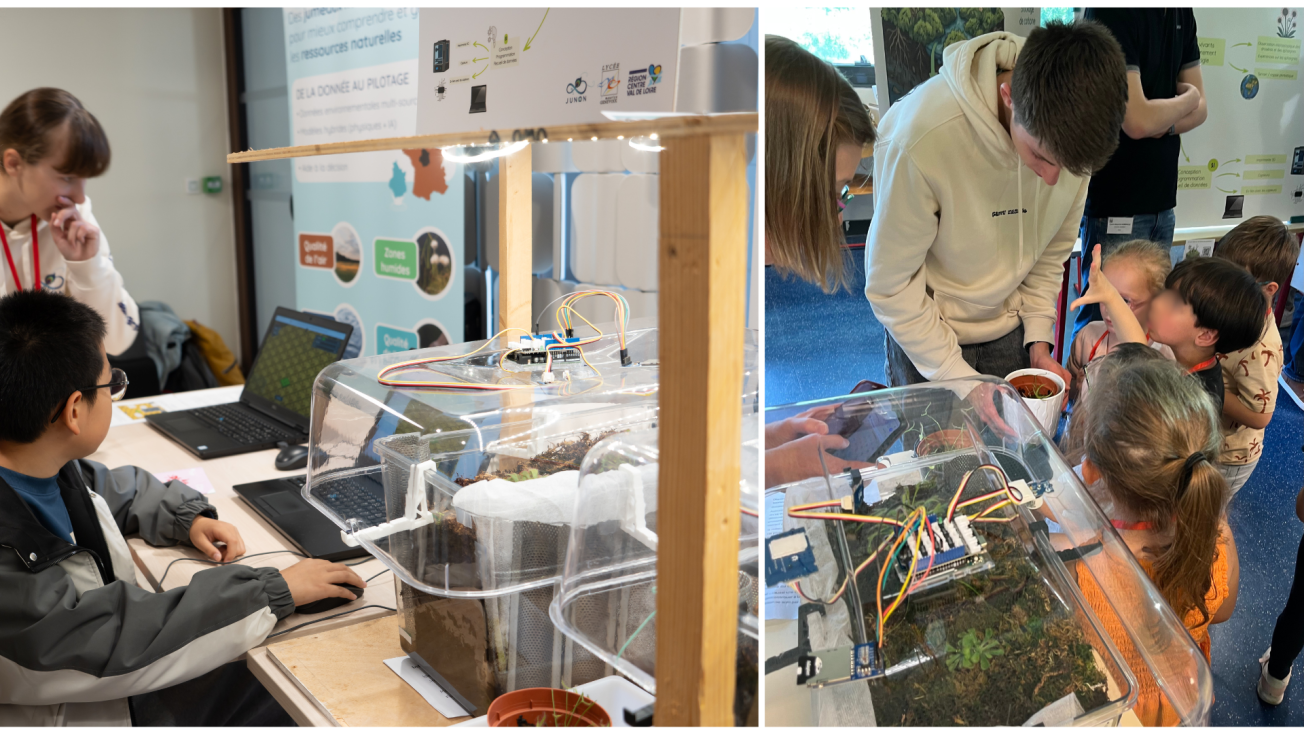
A gauche, la Fête de la science ; à droite, les Rencontres Jeunes Chercheurs et Chercheuses
© BRGM (Monica Molina, Anouk Fronzes)
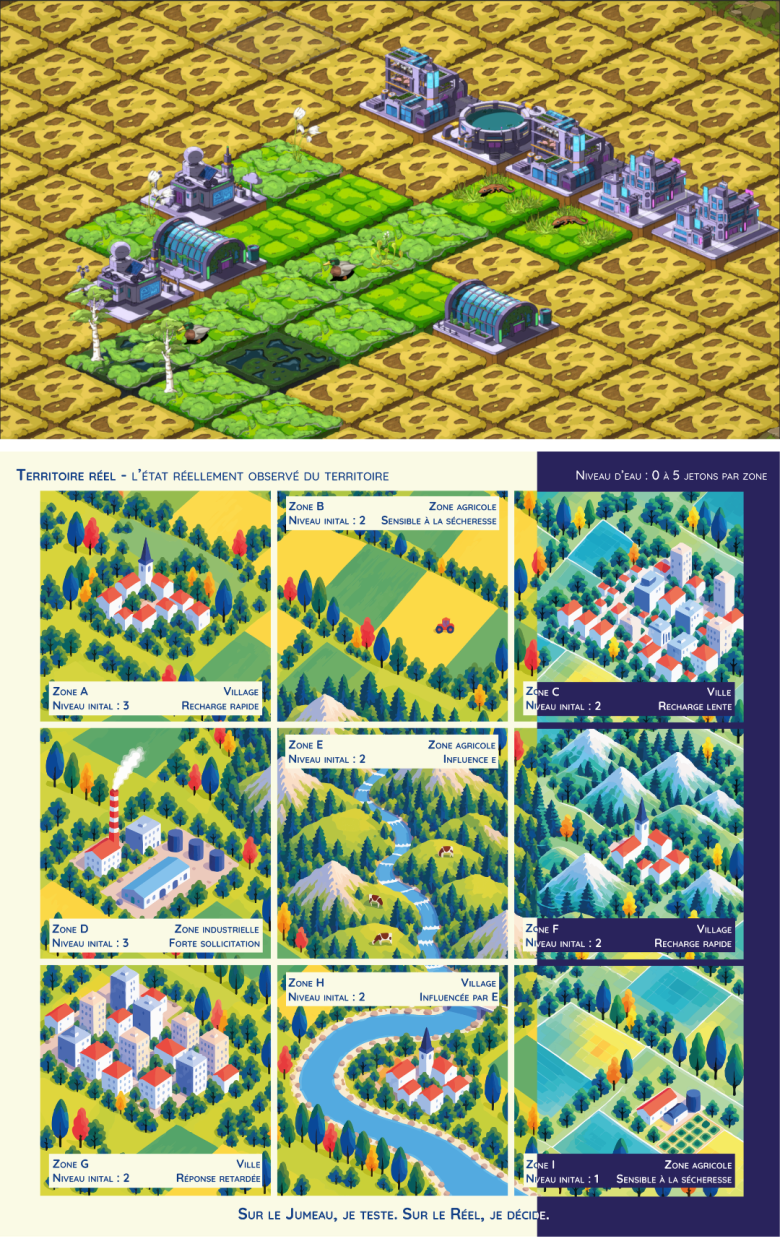
En haut, une capture d'écran de Tourbanisation ; en bas, les plateaux de Double Jeu
© BRGM
Exploring environmental science through games
To make scientific concepts more tangible and accessible, JUNON has explored the use of games as a science communication tool. Two complementary games were developed as part of the programme, each offering a different way to engage with environmental challenges and digital technologies.
Tourbanisation: protecting peatlands
The idea of developing a video game emerged from discussions with the students involved in the science workshop. They expressed a strong interest in this format, which reflects their familiarity with digital media.
With support from several professionals, the students co-designed Tourbanisation. Special thanks go to everyone who contributed to the project: Joris Drylewicz and François Boggio (Creartstudio), Étienne Cadic (Le Studio de Trop), Marine Drouin, Thi Thuy Ha Nguyen and Isidore Olivry.
In Tourbanisation, players manage a region where human development depends on the health of its peatlands. As they make land-use decisions, they explore the relationships between water levels, carbon storage, biodiversity, climate and human activities.
Available free of charge through a web browser, the game uses a simplified model of the main processes at work in peatland ecosystems, drawing on the environmental interactions studied within JUNON.
Through gameplay, players gain a better understanding of the delicate ecological balance that keeps these environments functioning.
Double Jeu: simulate today, decide in the real world
With its tagline, "Simulate here. Decide in the real world.", Double Jeu introduces players to the role of digital twins in groundwater resource management.
Using a physical territory and its digital twin, players analyse forecasts, anticipate the impacts of weather events and make decisions to protect available water resources.
The game offers a hands-on way to understand how environmental data and digital simulations can support real-world decision-making.
Double Jeu was developed with the support of Arkham Studio.
Project lead:

BRGM, 3 avenue Claude Guillemin
45100 Orléans
France