Today, these platforms continue to support JUNON's research activities.
A pioneering programme for environmental metrology in Centre-Val de Loire
Between 2016 and 2020, the PIVOTS programme (Plateformes d'Innovation, de Valorisation, d'Optimisation Technologiques Environnementales) established a unique network of experimental platforms dedicated to environmental monitoring, metrology and the remediation of natural and human-altered environments in the Centre-Val de Loire region.
Supported by the Centre-Val de Loire Regional Council and the European Regional Development Fund (ERDF), PIVOTS was designed to address a major challenge: improving our understanding, monitoring and protection of natural resources in the face of pressures from human activities and climate change.
The programme brought together researchers, higher education institutions, research organisations, businesses and public authorities around a shared ambition: developing tools, methods and infrastructure to observe, measure and understand interactions between soils, the subsurface, water and air.
Today, the platforms developed through PIVOTS represent one of the major scientific foundations on which the JUNON programme builds.
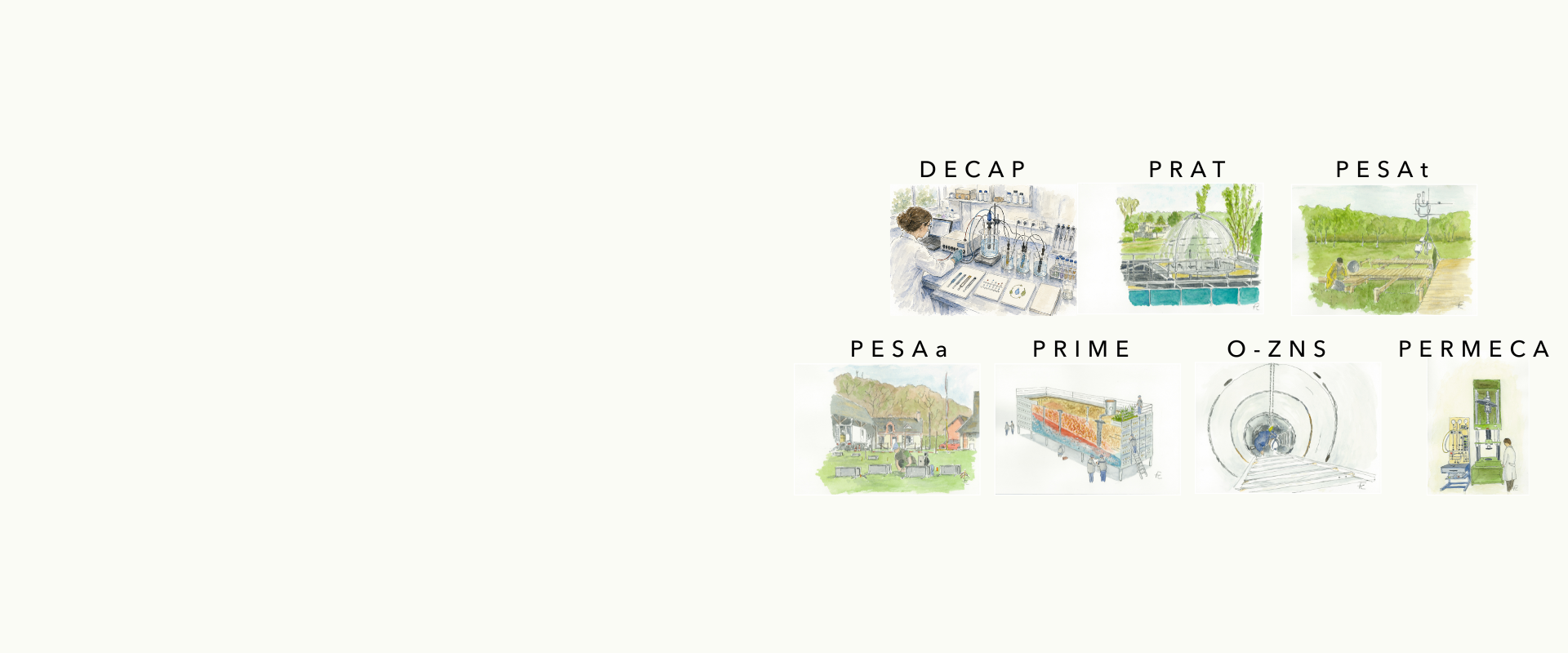
Seven complementary platforms dedicated to the environment
PRAT – Atmospheric Reactivity Platform
PRAT is dedicated to studying air quality and the physicochemical processes that determine the composition of the atmosphere. Operated by the ICARE and LPC2E laboratories, it combines laboratory experiments, field observations and the development of advanced instrumentation.
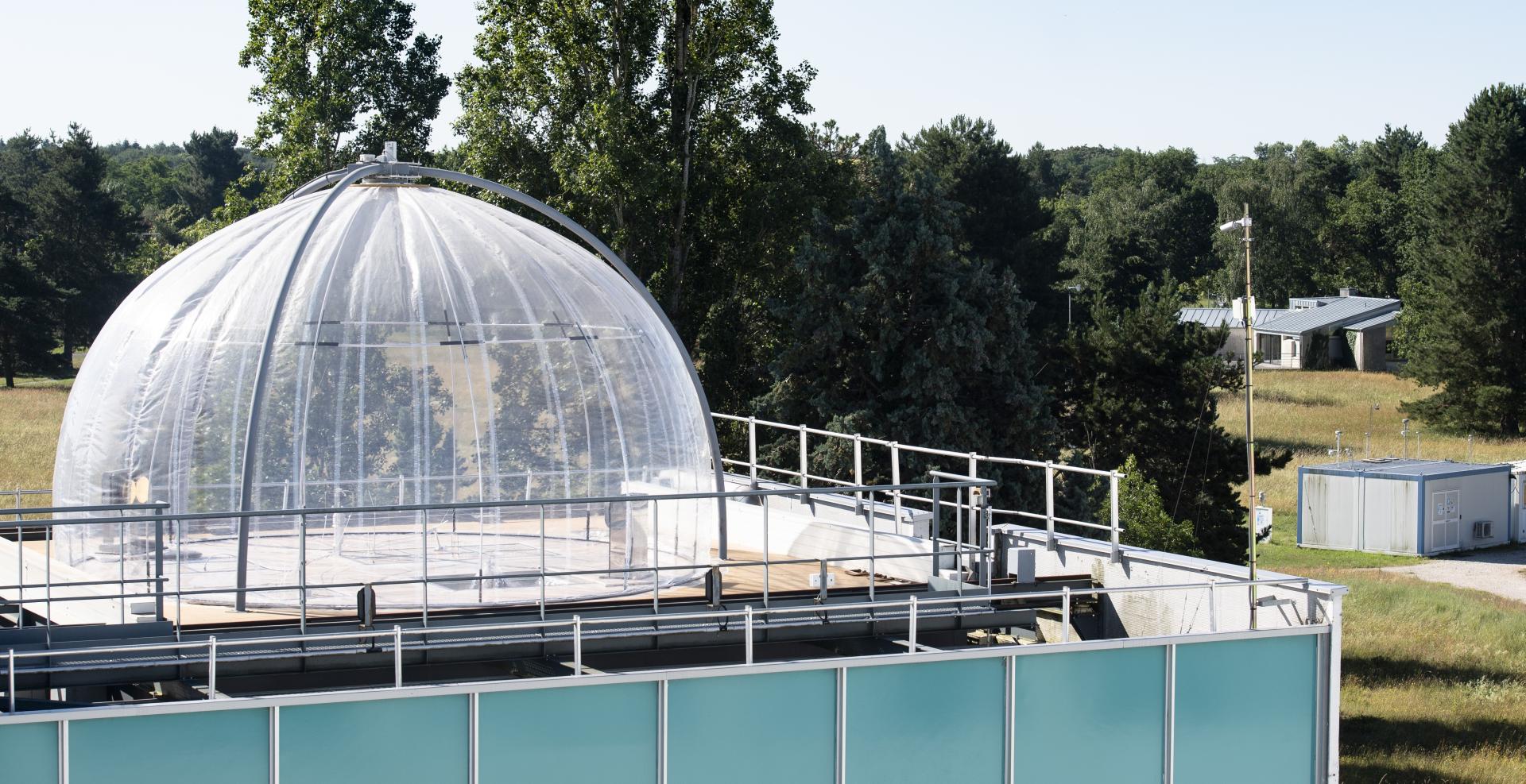
The platform includes HELIOS, an atmospheric simulation chamber using natural sunlight, unique in France, which makes it possible to reproduce atmospheric photochemical reactions under controlled conditions. It also includes the VOLTAIRE-HELIOS Supersite, dedicated to continuous monitoring of atmospheric pollutants in the Orléans urban area.
PRAT investigates the sources, transformation and impacts of atmospheric pollutants originating from transport, industrial activities, heating systems and agricultural chemicals. Its research contributes to improving our understanding of air quality, climate change and the health effects associated with exposure to pollutants.
PESAt – Peatland Soil–Atmosphere Exchange Platform
PESAt focuses on studying carbon, water and energy exchanges between peatlands and the atmosphere. These ecosystems play a major role in climate regulation by storing large amounts of carbon, but they can also become sources of greenhouse gases in response to environmental changes.
The platform relies on high-precision measuring equipment deployed in particular at the La Guette peatland (Cher, France). It combines flux towers, automated chambers, environmental sensors and analytical tools to continuously monitor carbon dioxide (CO₂) and methane (CH₄) emissions.
The data produced by PESAt help improve our understanding of wetland ecosystems, refine climate models and assess the impact of climate change on the role of these environments as carbon sinks or sources.
PESAa – Agricultural Soil–Atmosphere Exchange Platform
PESAa is dedicated to monitoring and experimentation in agricultural soils. Its objective is to better understand the interactions between farming practices, soil processes, water resources and greenhouse gas emissions.
The platform provides equipment for characterising the physical, biological and hydraulic properties of soils, alongside experimental systems such as rainfall simulators, precision irrigation systems and gas emission measurement instruments.
Research carried out through PESAa contributes to improving agricultural practices, supporting sustainable water resource management and reducing nitrous oxide (N₂O) emissions, a powerful greenhouse gas associated with agricultural activities.
PRIME – Environmental Metrology and Remediation Innovation Platform
Operated by BRGM, PRIME is a platform dedicated to developing, testing and validating innovative technologies for environmental monitoring and the remediation of contaminated environments.
Its facilities support experiments at different scales, from laboratory testing to industrial pilot trials. The platform includes a large experimental hall equipped with reactors, instrumented columns and pilot treatment systems.
PRIME supports the development of new sensors, environmental measurement methods and remediation processes for soils, water and the subsurface. It provides an essential link between scientific research and practical applications for local authorities and businesses.
O-ZNS – Unsaturated Zone Transfer Observatory
O-ZNS is a research infrastructure dedicated to studying the movement of water, heat and contaminants through the unsaturated zone, the section of the subsurface located between the ground surface and the groundwater table.
The platform is built around an instrumented observation shaft extending several tens of metres below ground, allowing researchers to install various sensors and measuring devices at different depths. It provides unique conditions for monitoring transport processes over long periods under real field conditions.
Research conducted at O-ZNS contributes to a better understanding of groundwater recharge, pollutant transport and the impacts of climate change on groundwater resources.
PERMECA – Collaborative and Applied Environmental Mechanics Research and Testing Platform
PERMECA specialises in studying the thermo-hydro-mechanical behaviour of soils, rocks and recycled materials. It provides experimental equipment capable of reproducing laboratory conditions representative of the stresses experienced by materials in their real environments.
The platform makes it possible to investigate the effects of mechanical, thermal and hydraulic stresses on infrastructure, geotechnical structures and materials used in circular economy initiatives.
Research carried out at PERMECA contributes to improving infrastructure resilience, developing innovative geothermal solutions and promoting the use of recycled materials in sustainable development projects.
DECAP – Sensor Development Platform
DECAP is dedicated to designing innovative sensors and developing treatment processes for water quality monitoring. Supported by several research laboratories from CNRS and the University of Orléans, it bridges the gap between fundamental materials research and environmental applications.
The platform develops devices capable of detecting and monitoring various micropollutants in natural waters, industrial water and wastewater treatment plant effluents. It also investigates remediation processes based on electrochemistry, carbon-based materials and plasma technologies.
Through its experimental and analytical facilities, DECAP contributes to developing more effective solutions for environmental monitoring and the protection of water resources.
Logo du programme PIVOTS
Programme PIVOTS
From PIVOTS to JUNON: Scientific Continuity
The JUNON programme builds directly on the legacy of PIVOTS. While PIVOTS generated reference environmental data through advanced experimental infrastructure, JUNON now uses these observations to develop environmental digital twins and innovative decision-support services.
The PIVOTS platforms therefore continue to play an essential role by providing the field data needed to understand natural environments and feed the digital models developed within JUNON.
This combination of observation, measurement, experimentation and digital technologies is now one of the key strengths of the regional environmental research ecosystem in Centre-Val de Loire.